Why the running surface dimensions matter more than the deck description, which sizes appear in exact listings and how to handle a record that states none. This guide uses exact Amazon listing records, not hands-on running tests. Seller specifications illustrate the questions to ask; they do not establish measured performance, and nothing here replaces the machine manual or a licensed electrician for any supply, circuit or receptacle question.
Width for walking, length for running
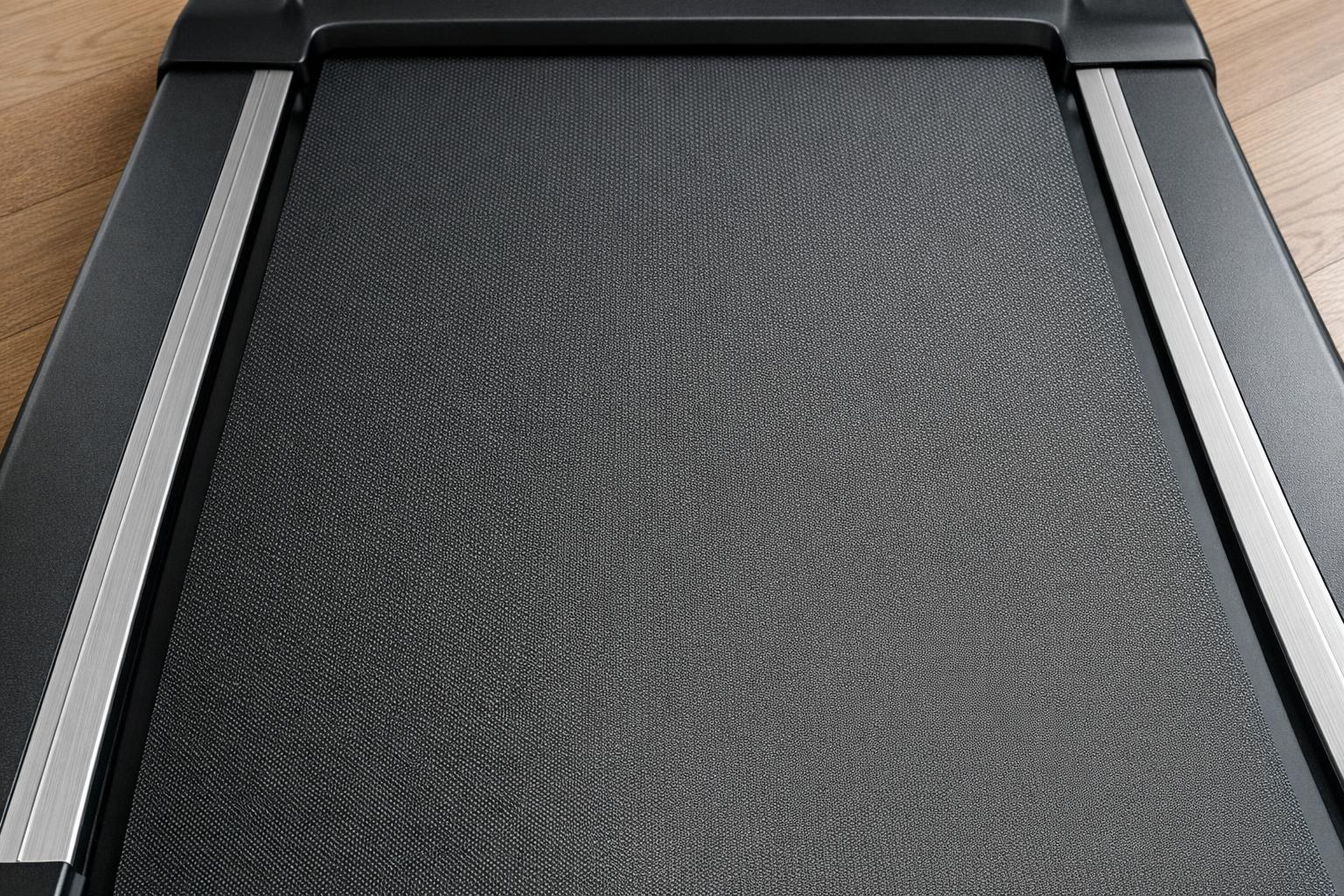
The belt is the only part of a treadmill you touch while it runs, and its dimensions decide whether your stride fits. Width governs how much lateral room you have for a natural arm swing and a slightly off-center step. Length governs whether a running stride lands on the belt rather than the motor cover or the rear roller guard. Manufacturers state both as width by length in inches, and we record a size only when the listing gives both numbers with a unit.
Common stated sizes in our catalog run from 16" x 50" on the Sunny Health & Fitness 12% auto incline record through 20" x 60" on the Niceday TM3 record to 64" x 24" on the GYMOST 15% auto incline record. Those are three different machines for three different uses, and the belt number alone tells you which is which.
Reading the numbers a listing gives
Listings do not agree on the order of the two figures. The GYMOST record writes 64" x 24", the Niceday record writes 60" x 20" in one bullet and 20" x 60" in another, and the 3G Cardio Pro Runner X record writes 20.5" x 58". Our extraction takes the smaller figure as width and the larger as length, and stores the exact quoted phrase beside each value so you can see the source text.
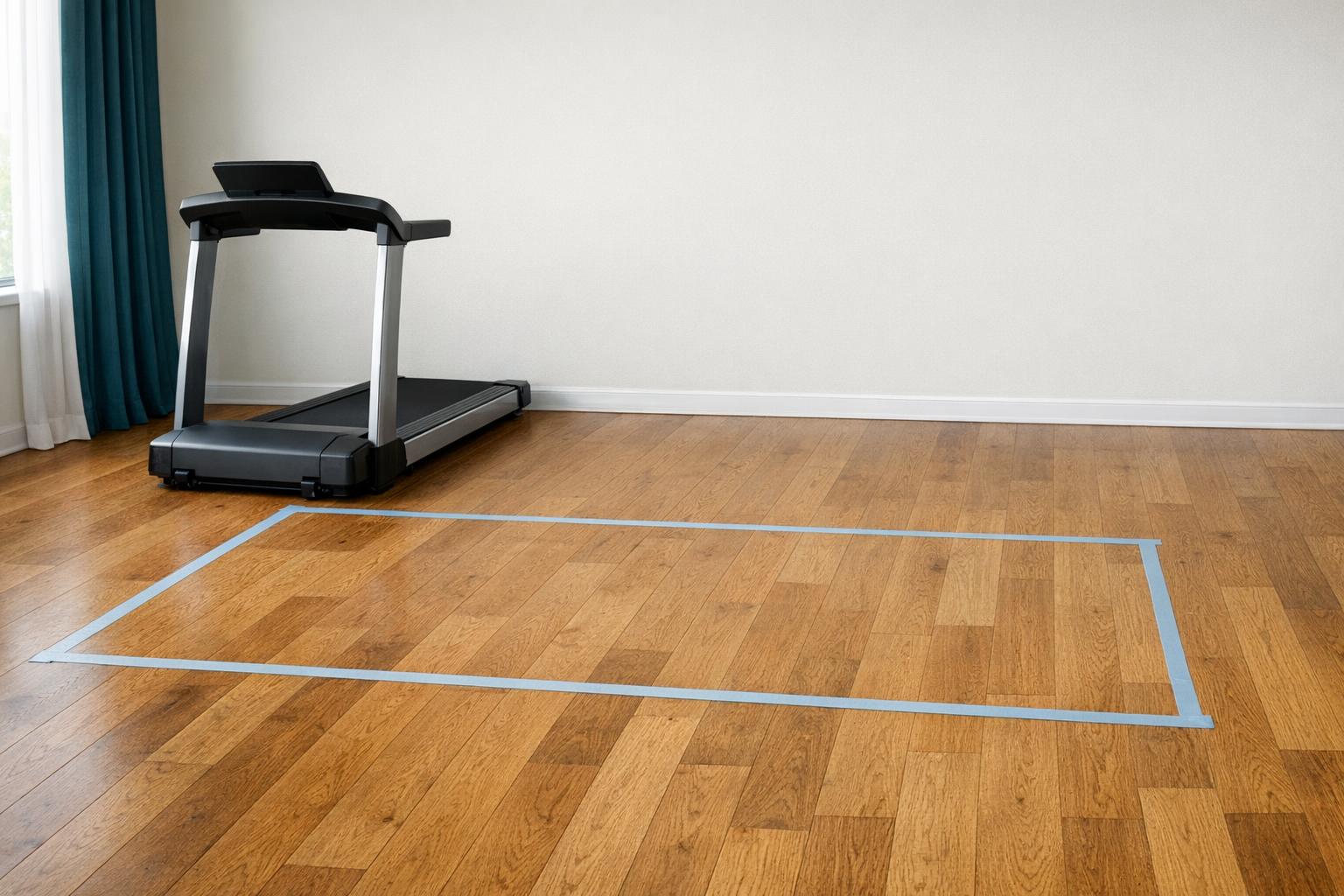
Be careful with a second set of dimensions in the same bullet. Frame or assembled dimensions such as 55" x 32" describe the whole machine and are what you need for the space planning guide, not the running surface. A listing that only gives frame dimensions has not stated a belt size.
What to do when the listing states no belt size
Several well-reviewed listings in our catalog, including some from the largest brands, state speed and incline but not the belt dimensions in the title or feature bullets. We leave that value blank on the product page and in the comparison table rather than filling it from a manufacturer website, a previous model year or a similar-looking machine. A blank is information: it tells you to open the manual or the manufacturer's specification sheet before ordering.
When you do find the figure, note whether it comes from the manual or from a third-party page. The manual is the document the warranty relies on. Our buying checklist suggests keeping one row per exact model with a source column for every requirement.
Deck description is not belt size
Phrases such as extra-wide deck, spacious running area or 20 inch wide belt are selling language until a number with a unit appears. A wide-deck claim next to an 18 inch figure and a plain description next to a 20 inch figure describe the opposite of what the adjectives suggest. The Niceday record also states a 20 mm cushioned deck thickness; that is a construction statement, not a belt dimension, and we do not treat it as one.
Similarly, a belt size does not describe the deck length under the belt or the step-up height. The 3G Cardio record states a low 6.5" step-up height as a separate claim. Read each as its own line.
Match the belt to the tallest regular user
There is no single correct size. A household that walks at 3 mph is well served by a 16 inch belt; a tall runner at 10 mph will want the longest belt in the budget, and the 58 to 64 inch listings exist for that reason. Decide who the tallest regular runner is, decide their top speed, and then filter listings by stated length first and width second.
The home treadmill comparator on this site shows the documented belt size for every ranked machine and leaves the cell blank where the listing is silent. The score does not reward a longer belt; belt size is a fit criterion for you, not a performance bonus in the ratings.
Step-up height is a related figure worth a line of its own. It is the distance from the floor to the belt surface, and it adds to the ceiling calculation and to how easy the machine is to mount. Low-profile listings state it; most do not. Where a record gives it, we quote it on the product page as the seller states it and do not infer it for others.
Sources and further reading
- Sunny Health & Fitness Foldable 12% Auto Incline Wi-Fi Treadmill
- 3G Cardio Pro Runner X Treadmill - Heavy Duty Home Construction - FreeSync FTMS Bluetooth Connectivity - Low 6.5" Step-up Height - Foldable Compact Storage - Orthopedic Belt - 350 lb Capacity
- Niceday TM3 Commercial Series Treadmills for Home Gym Use
- GYMOST Treadmill for Home with 15% Auto Incline 64"x 24" Running Belt