How to read incline percentages, level counts and auto versus manual incline in exact treadmill listings. This guide uses exact Amazon listing records, not hands-on running tests. Seller specifications illustrate the questions to ask; they do not establish measured performance, and nothing here replaces the machine manual or a licensed electrician for any supply, circuit or receptacle question.
Percent grade, not degrees
Incline on a treadmill is stated as a percentage grade: the rise divided by the run. A 12% grade rises 12 units for every 100 travelled, which is roughly 6.8 degrees. Sellers usually state the maximum grade as a percentage, and our comparisons show an incline only when the exact listing does so. The Sunny Health & Fitness record states 15 incline levels up to 12%; the MERACH record states a 15/18% auto incline in its title; the UMAY heavy duty record states a 2% to 20% range.
Occasionally a listing prints a percentage beside a degree figure that does not correspond to it. We treat that as internally inconsistent and leave the incline unknown rather than choose one of the two numbers. If you see a grade and a degree figure together, check the manual.
Levels are not percentages
Many listings lead with a level count: 15 levels, 20 levels, 4 levels. A level is a step on the controller, and the grade per step depends on the maximum. Fifteen levels up to 12% is 0.8% per step; twenty levels up to 20% is 1% per step. A listing that states only a level count and no percentage has not stated the incline, and we do not infer one.
The TREAFLOW walking pad record states a 0-8% incline; the SereneLife record elsewhere in our catalog states a 4-level manual incline with no percentage. Those two descriptions are not comparable, and only the first appears as a documented incline on our product pages.
Auto incline versus manual incline
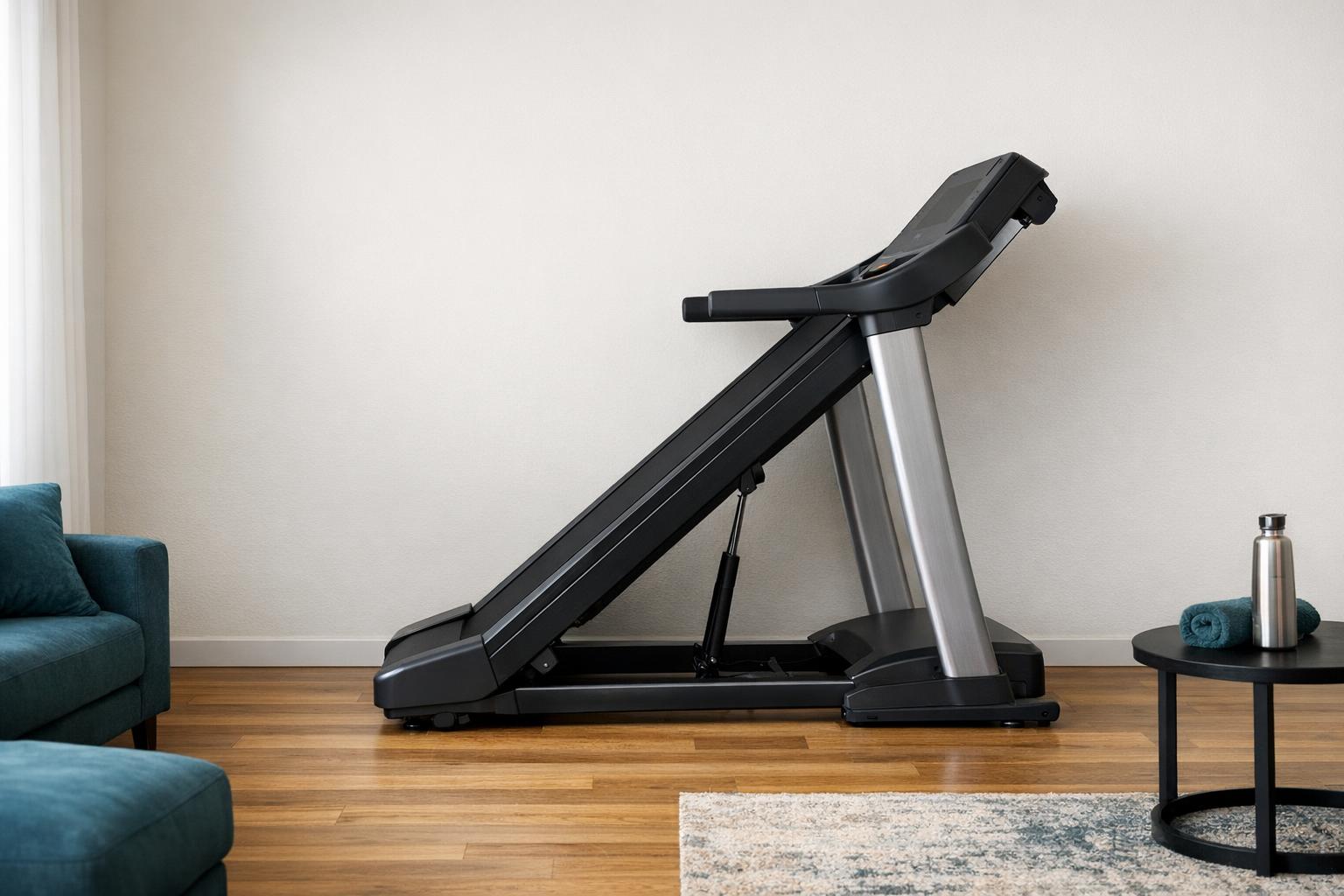
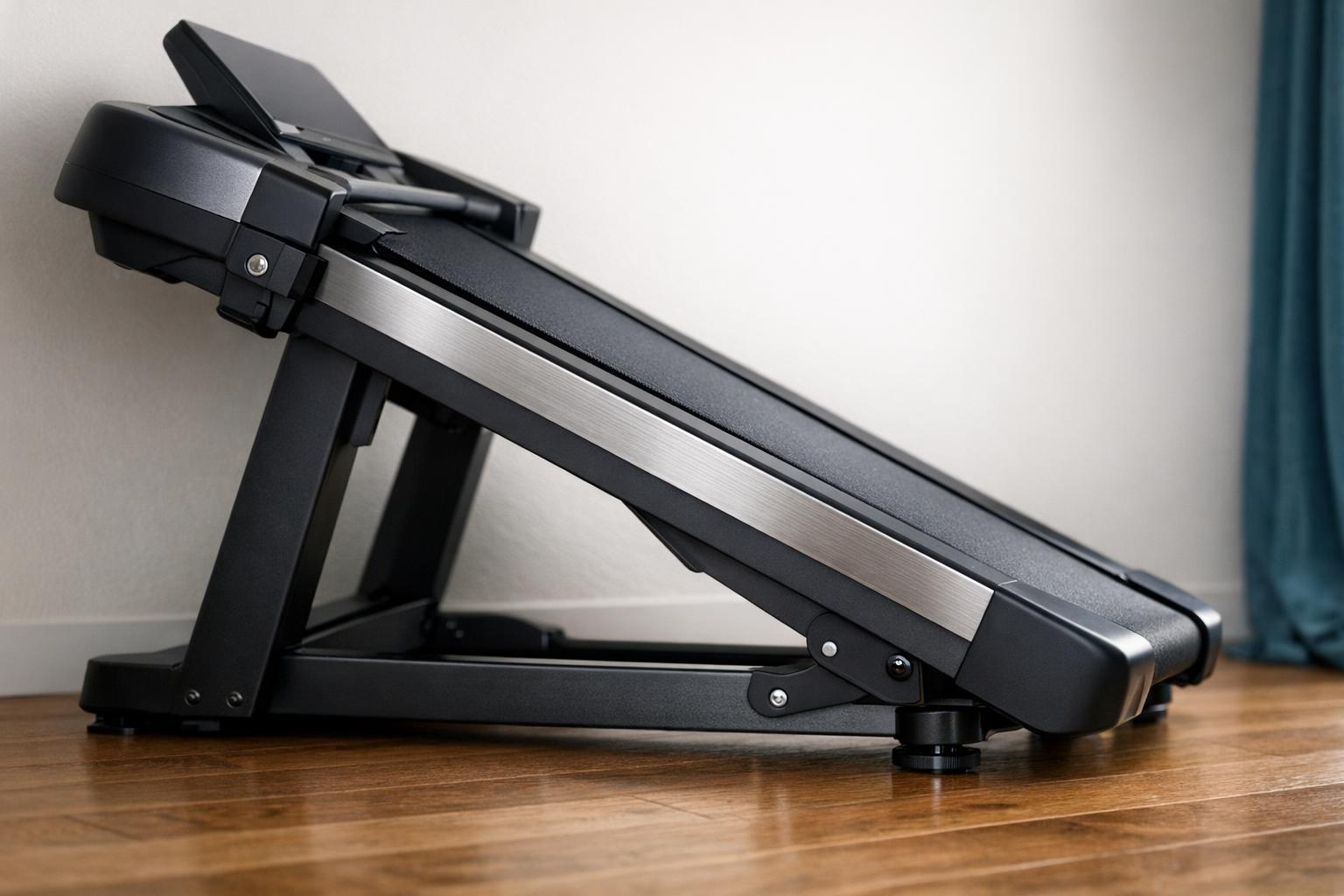
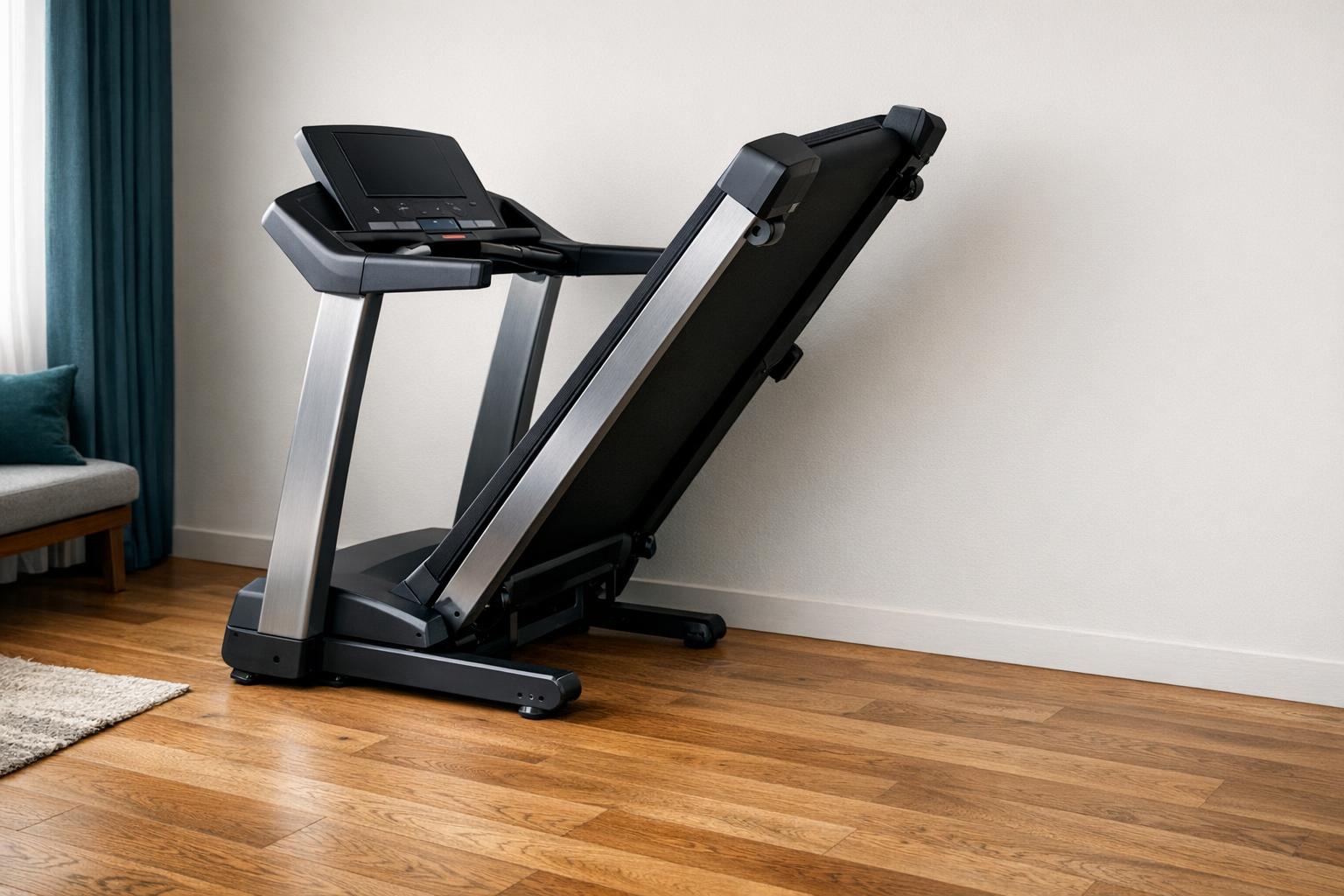
Auto or power incline means a motor changes the deck angle from the console. Manual incline means you set the rear feet or a fixed riser before you start. Both appear on compact units and full treadmills. The MERACH, Sunny and UMAY records state auto incline; several walking pad records describe manual incline positions. Neither wording is a measurement of the grade achieved, and an auto incline listing with no percentage is still an unknown grade.
If you will change incline during a session, auto incline is a practical requirement. If you set one grade and leave it, a manual incline saves money and a lifting motor. The treadmill vs walking pad guide covers which class tends to offer which.
Incline changes the space you need
Raising the deck raises the front of the belt and your head. Add your height to the stated deck height at maximum incline and compare it with the ceiling, especially under sloped roofs or in basements. Incline also changes the loading on the rear feet and any mat beneath them. Our space and clearance guide goes through the ceiling check in order, and the accessories guide covers mats.
How our incline comparator uses these statements
The incline treadmill comparator on this site admits only treadmill listings whose exact text states a grade of 12% or more, with captured Amazon review evidence for that ASIN. The percentage is an eligibility criterion, not a score bonus: a 20% listing does not rank above a 12% listing because of the number. Ranking follows the published methodology, which blends the public review average, review volume and listing documentation.
Grade figures are seller statements. We have not measured any deck angle, and a manufacturer manual may state a different maximum for a specific configuration. Confirm the range in the manual and on the live listing before ordering.
Decline is a separate feature. A few treadmills lower the deck below level, described as a negative grade such as -3%. Our extraction records only the stated maximum incline, so a decline capability appears in the quoted listing text but not as a separate specification. If downhill grades matter to you, search the manual for the full range.
Lastly, a stated incline on a walking pad usually means a fixed or manually set riser rather than a motorized deck, and the grade achieved depends on the pad length. The TREAFLOW record's 0-8% figure is a seller statement about that unit; a similar-looking pad with no percentage has stated nothing, and we show nothing for it.
Sources and further reading
- Sunny Health & Fitness Foldable 12% Auto Incline Wi-Fi Treadmill
- MERACH Treadmill with 15/18% Auto Incline, 55"/47"x18"/19" Wide Belt Treadmills, 0.5-8.7MPH/10MPH 3.5HP Brushless Incline Treadmill for Home, 350LBS Foldable Treadmills with Screen & APP & Heart Rate
- UMAY Heavy Duty Treadmill with 20% Auto Incline for Home Gym
- TREAFLOW Walking Pad with Incline, Under Desk Treadmills for Home