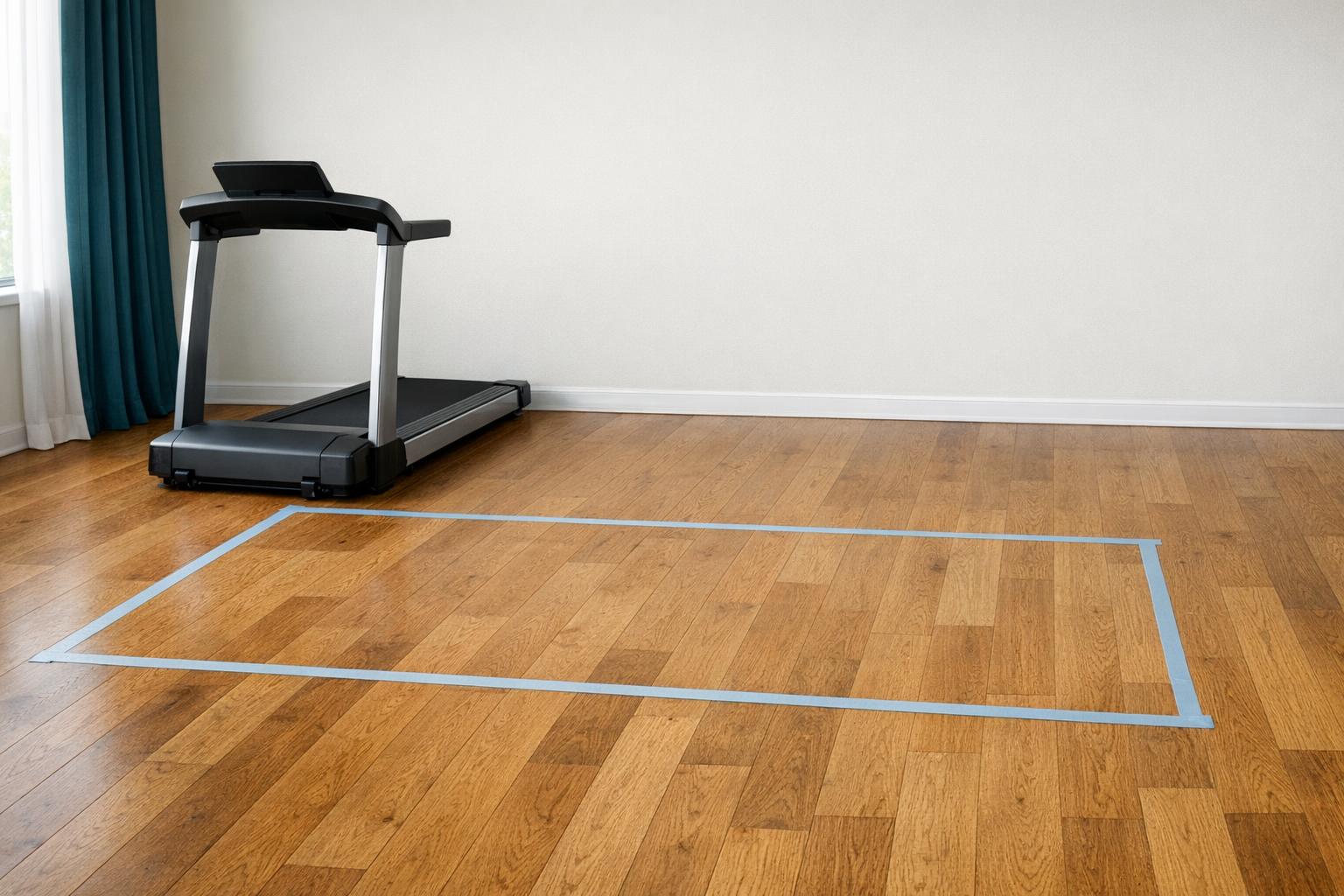
How to turn a listed treadmill length and width into the floor rectangle you actually need, using published clearance references and the exact manual. This guide uses exact Amazon listing records, not hands-on running tests. Seller specifications illustrate the questions to ask; they do not establish measured performance, and nothing here replaces the machine manual or a licensed electrician for any supply, circuit or receptacle question.
Assembled footprint first
The footprint is the assembled length and width of the frame, not the belt. Listings that state it are the minority: the UMAY heavy duty record gives a 55" x 32" frame beside its 55" x 18" belt, and the Yagud walking pad record gives 47.2 x 19.6 x 4.6 inches for the whole unit. The MERACH record states a 47 or 55 inch belt option and a folding design but leaves the assembled dimensions to the manual. Use the manual figure when the listing is silent; never estimate it from the belt.
Height matters too. The assembled height plus your own height at the steepest incline you will use should sit below the ceiling with room to spare.
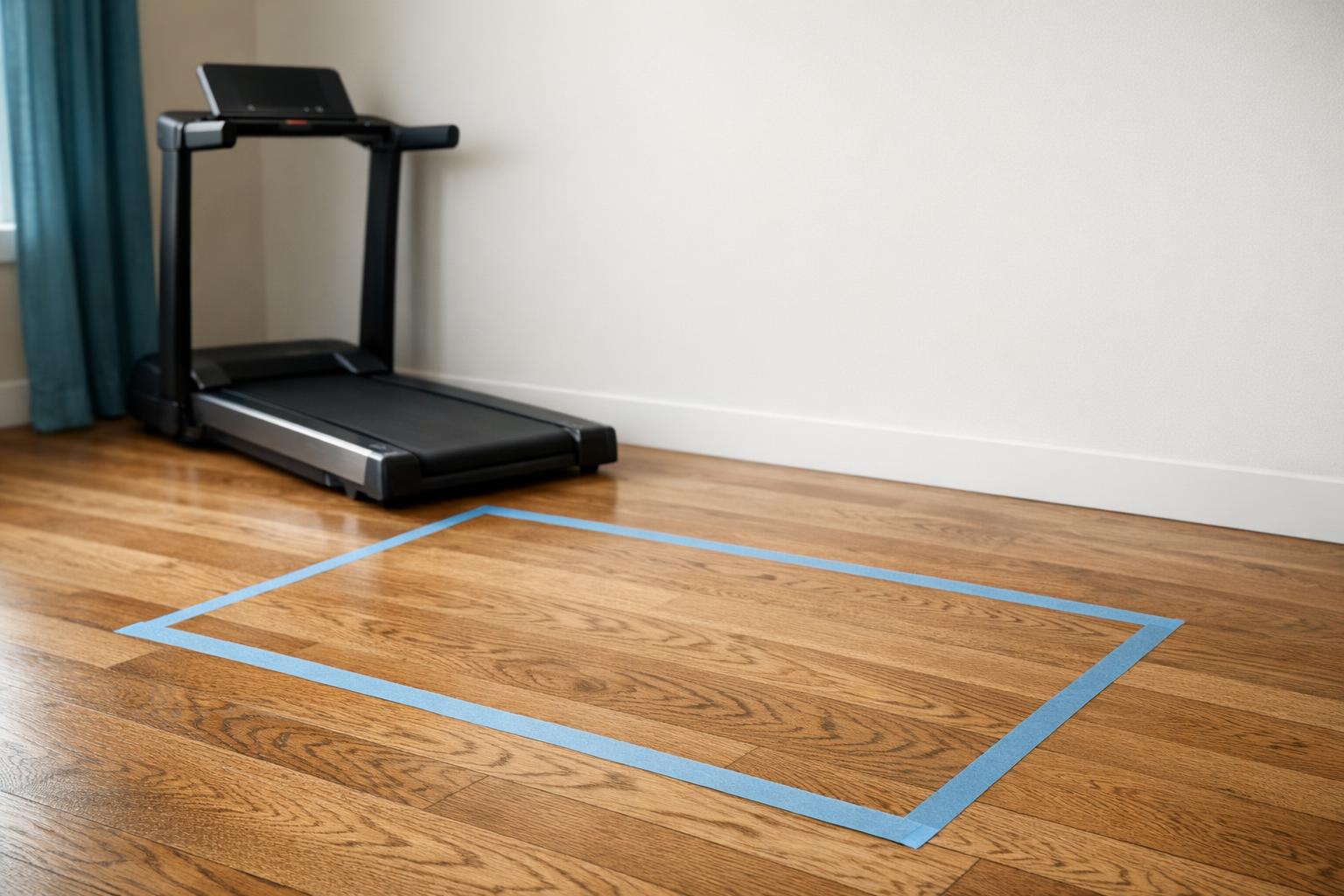
Add the clearance the standard references
The motorized treadmill specification ASTM F2115 cites clear space of about 2 m (78.7 in) behind the treadmill and 0.5 m (19.7 in) on each side. The treadmill space planner on this site adds exactly those figures to a listed length and width: required length equals treadmill length plus 78.7 in, required width equals treadmill width plus 2 x 19.7 in, checked in both orientations. Nothing else enters the calculation. If the manual for your exact model states different clearances, the manual governs.
For example, a 70 x 34 in footprint needs about 148.7 x 73.4 in of clear floor. That is longer than many spare bedrooms, which is why the measurement belongs before the shortlist.

Doors, delivery routes and floors
A boxed treadmill arrives heavy and long. The 3G Cardio Pro Runner X record states a 216 lb machine; the MERACH record states 122 lbs. Measure the narrowest turn between the front door and the room, and check whether the machine ships partly assembled. Two-person assembly is a common listing note. Also consider the floor: a mat protects the surface and spreads the load, and the accessories guide covers mat sizes that match common footprints.
Folding changes storage, not running space
A folding deck reduces the footprint when the machine is parked, and the folding treadmill checklist covers the questions to ask. While the belt is moving, the full footprint and full clearance apply. Do not plan a room around the folded dimensions. Walking pads with a 4 to 5 inch body height are the exception because they store flat, but they still need clear floor around them in use.
Planning order and where the planner stops
Measure the clear floor rectangle, then the ceiling height. Read the assembled length, width and height on the exact listing or manual, and the clearance the manual requires. Run the planner, then check the electrical requirement: a standard outlet you already have is fine; anything more is a question for a licensed electrician. This site gives no installation guidance.
The planner answers a geometry question and nothing else. It does not establish stability, noise, safe use or suitability of a floor. Read the buying checklist to place the space question in the wider decision.
Consider also where the power cord runs and where the safety key clip lands. A cord across a walkway behind the machine is a trip hazard inside the clearance zone you just measured, and the manual usually specifies a maximum distance from the outlet. Plan the outlet position with the footprint, and leave any new outlet or circuit to a licensed electrician.
If the only candidate room is upstairs, note the machine weight from the listing or manual and think about floor noise and vibration through the ceiling below. A mat helps with the second problem, and the accessories guide covers mat sizes. Neither the planner nor any listing tells you whether a given floor is suitable; that is a question for a builder or structural professional, not a comparison site.
Write the three numbers on the shortlist itself: required rectangle with clearance, assembled height plus your height at maximum incline, and machine weight. A candidate that fails any one of them leaves the list before you compare consoles or reviews.
Sources and further reading
- MERACH Treadmill with 15/18% Auto Incline, 55"/47"x18"/19" Wide Belt Treadmills, 0.5-8.7MPH/10MPH 3.5HP Brushless Incline Treadmill for Home, 350LBS Foldable Treadmills with Screen & APP & Heart Rate
- UMAY Heavy Duty Treadmill with 20% Auto Incline for Home Gym
- Yagud Walking Pad Treadmill for Home Office, Portable Under Desk Treadmill with Remote Control and LED Display, Walking Jogging Running Machine for Home
- 3G Cardio Pro Runner X Treadmill - Heavy Duty Home Construction - FreeSync FTMS Bluetooth Connectivity - Low 6.5" Step-up Height - Foldable Compact Storage - Orthopedic Belt - 350 lb Capacity