How to read lubricant listings, why the manual sets the interval and product type, and the routine checks that keep a belt tracking straight. This guide uses exact Amazon listing records, not hands-on running tests. Seller specifications illustrate the questions to ask; they do not establish measured performance, and nothing here replaces the machine manual or a licensed electrician for any supply, circuit or receptacle question.
The manual sets the rule; the lubricant listing follows it
Most home treadmill manuals ask for periodic lubrication between the belt and the deck with a specific type of lubricant, usually 100% silicone, at a stated interval in hours or months. Some decks are described as maintenance-free or pre-lubricated, and some manufacturers void a warranty if the wrong product is used. Read your manual first. The Spot On premium lubricant record describes a 100% pure silicone formula made in the USA with an 8 inch application tube; the IDMIDM record explicitly asks buyers to check the equipment manufacturer's lubricant and viscosity requirements before use. That instruction applies to every bottle in this category.

What the applicator claims mean
Listings compete on how the lubricant reaches the middle of the belt. The Spot On record describes a patented tube that slides between belt and deck to deliver lubricant to the center without loosening the belt; the SEKODAY record describes a hard application tube adjustable up to 10 inches; the Action Fitness record describes an 11 inch extension tube and a twist spout. Bottle sizes run from 4 oz to 8.4 oz and larger. These are convenience descriptions; the manual's quantity per application is the figure to follow, and over-lubrication is a documented cause of belt slip.

Routine checks between lubrications
Belt tension and tracking are adjusted with the rear roller bolts described in the manual, usually in quarter turns. Check that the belt is centered and does not hesitate under foot at low speed. Wipe dust from the deck edges and the motor cover vents, and keep the area under the machine clear. A mat, covered in the accessories guide, keeps carpet fibres out of the belt. Vacuum around the rear roller rather than under a running belt.
Check the safety key and its cord, the power cord and plug, and any console fixings. Anything involving the electrical supply beyond the machine's own plug is a question for a licensed electrician.
Walking pads have their own rules
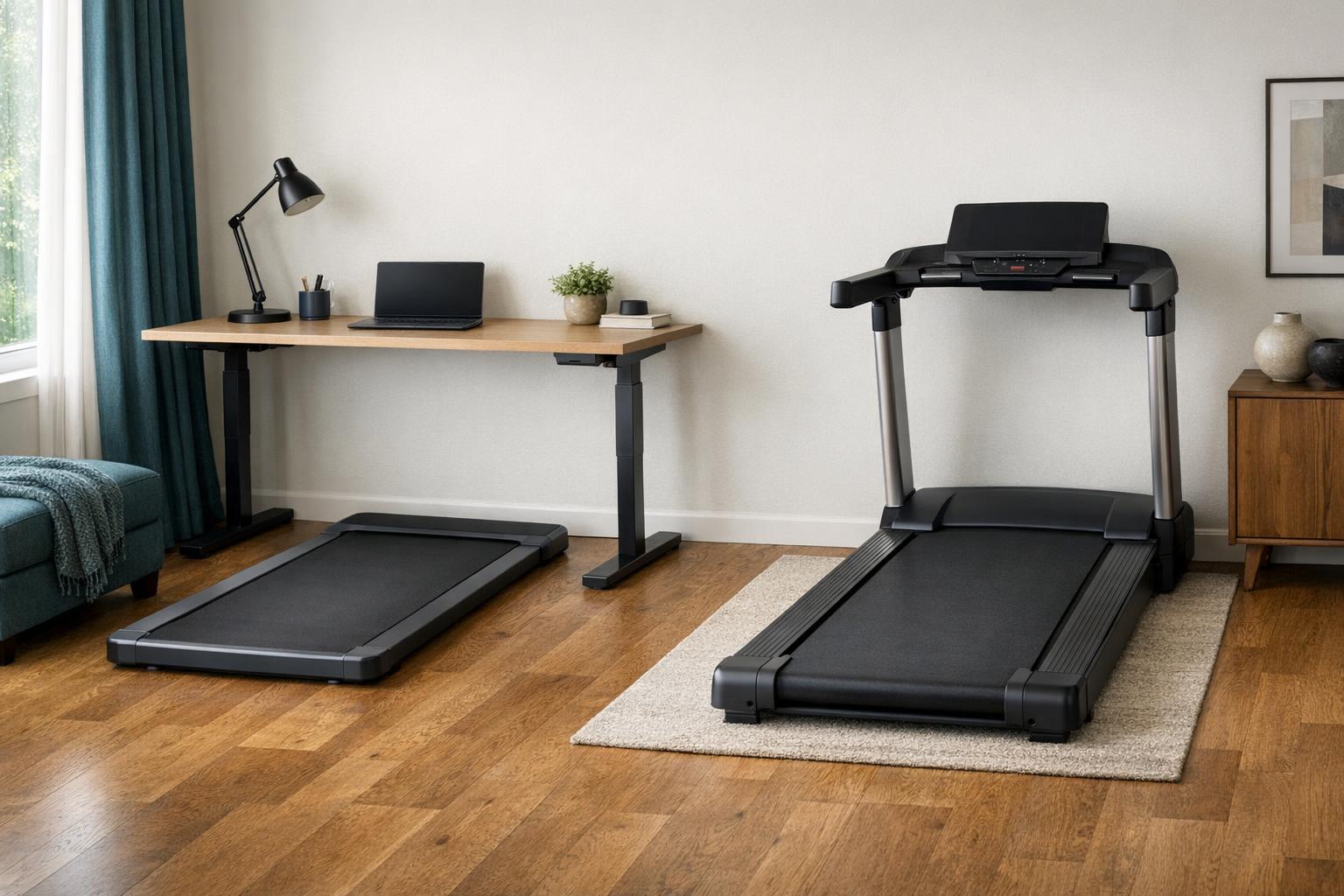
Compact pads often ship with a small bottle and a shorter interval because the belt is thinner and the deck lower. The IDMIDM record notes that some walking pads require silicone lubricant; others are described as self-lubricating. The treadmill vs walking pad guide covers how the two classes differ. Do not carry a full-size treadmill's interval across to a pad or the reverse; read the pad's manual.
Keep records and match the exact product
Note the date, quantity and product each time you lubricate, and keep the manual's interval visible. If the manual names a specific lubricant or viscosity, match it; a generic silicone bottle that looks similar may be thinner or thicker than specified. Our accessory listings show the seller's own description and the exact ASIN so you can compare bottle size and applicator type, and the buying checklist suggests budgeting for the first year of consumables alongside the machine. Nothing on this site replaces the manufacturer's maintenance schedule.
A few maintenance items sit outside the belt entirely. The motor compartment collects dust and the manual usually describes removing the cover to vacuum it at a stated interval, with the machine unplugged. The safety key should stop the belt immediately every time you test it. Console buttons, heart-rate grips and the incline mechanism should move freely and quietly. Log anything that changes.
Cleaning products matter as much as lubricant. Manuals commonly ask for a damp cloth and mild soap on the frame and console and warn against solvents or silicone spray on the belt's top surface, which makes it slippery. A spray lubricant listed for treadmills is meant for the deck side of the belt, not the running surface; read the applicator instructions and the manual together.
If the belt starts to slip, hesitate or drift after a service, the usual causes described in manuals are over-lubrication, incorrect tension or uneven rear roller adjustment. Work through the manual's sequence rather than adding more lubricant. When a symptom persists, the manufacturer's support line is the right call, and the model and serial number from the frame label are what they will ask for.
Sources and further reading
- Premium Treadmill Belt Lubricant - Made in The USA - Patented 8 Inch Application Tube and Precision Twist Cap - 100% Pure Silicone - Spot On
- SEKODAY Silicone Treadnmill Belt Lubricants/Lubes | 4.2 Ounce, High Temperature Resistant and Stable Lubricant,with Hard Application Tubes and Precision Screw Caps for Easy Use
- Action Fitness 100% Silicone Treadmill Lubricant - 4oz Bottle
- IDMIDM Treadmill Lubricant for Belt, 100% Silicone Oil, 4 fl oz (118 ml)